Flatbed Towing
The safest way to transport your vehicle without causing damage or wear.
What Makes Flatbed Towing Different
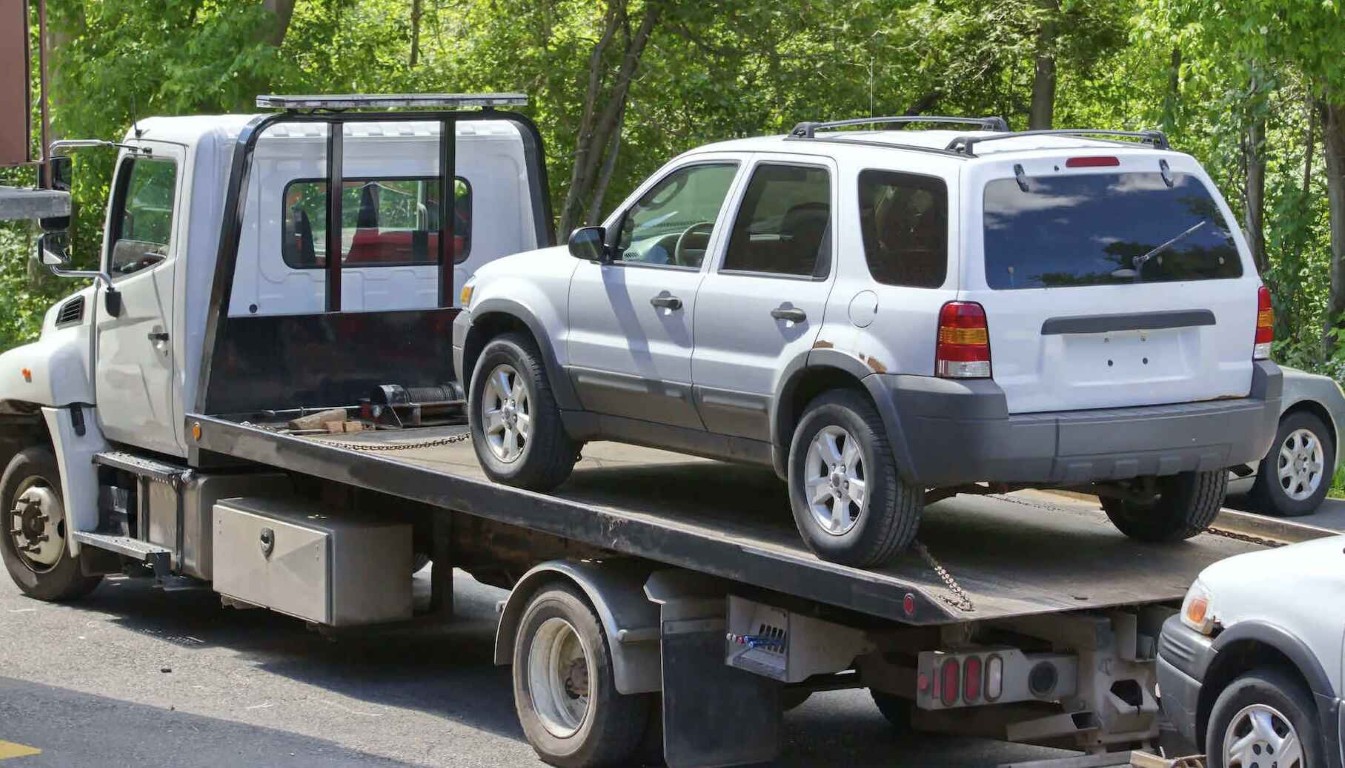
Flatbed towing is the gold standard for vehicle transport. Instead of lifting just two wheels like a traditional tow truck, a flatbed truck has a large platform that your entire vehicle sits on. Your car is loaded onto the bed of the truck, secured in place, and transported without any of its wheels touching the road. This method eliminates wear on your tires, transmission, and other components.
Traditional wheel-lift towing has its place for basic breakdowns, but flatbed towing offers superior protection. When your car is on a flatbed, there's no risk of transmission damage from having the drive wheels lifted while the others roll. There's no stress on your suspension from being towed at an angle. Your vehicle is completely supported and protected throughout the journey.
We use flatbed towing for most of our jobs because we believe it's the right way to transport vehicles. When you trust us with your car, we want to deliver it in the exact same condition we picked it up. Flatbed towing gives us the best chance of doing that. Whether you need emergency towing or planned vehicle transport, flatbed service is the safest option. For professional tow service that prioritizes your vehicle's safety, our flatbed trucks provide the protection and care your car deserves.
Vehicles That Need Flatbed Towing
Certain vehicles should always be towed on a flatbed to avoid damage. All-wheel drive and four-wheel drive vehicles are at the top of this list. If you tow these vehicles with only two wheels on the ground, you can cause serious damage to the drivetrain and transmission. The cost of repairing that damage far exceeds the cost of using flatbed towing in the first place.
Luxury and sports cars also benefit from flatbed towing. These vehicles often have low ground clearance, which makes traditional towing methods risky. A flatbed keeps your expensive vehicle off the ground and away from potential hazards. Classic cars and collectible vehicles should always be transported on a flatbed to preserve their value and condition.
Ideal Vehicles for Flatbed Towing
- All-wheel drive and four-wheel drive cars, trucks, and SUVs
- Luxury vehicles with low ground clearance or advanced suspension systems
- Sports cars and high-performance vehicles
- Classic cars and vintage vehicles
- Exotic cars and specialty vehicles
- Motorcycles and other two-wheeled vehicles
- Vehicles with major front or rear end damage
- Cars with transmission problems or missing wheels
How Flatbed Towing Works
Loading a vehicle onto a flatbed truck is a precise process that requires skill and experience. When our driver arrives, they'll position the flatbed truck as close to your vehicle as possible. The bed of the truck tilts down using hydraulics, creating a ramp that your car can be loaded onto.
If your vehicle can roll, we'll use a winch to pull it up the ramp and onto the flatbed. If your car can't roll because of damage or mechanical failure, we have specialized equipment to move it safely. Once your vehicle is positioned on the flatbed, we use heavy-duty straps and chains to secure it in place. These restraints are attached to your vehicle's frame or designated towing points to prevent any movement during transport.
During transport, your vehicle stays completely stationary on the flatbed. There's no bouncing, swaying, or stress on the suspension like you might experience with other towing methods. When we reach your destination, the process is reversed. The bed tilts down, the restraints are released, and your vehicle is carefully unloaded. It's a straightforward process, but it requires training and attention to detail to do it right.
Flatbed vs Other Towing Methods
Wheel-Lift Towing
Wheel-lift towing uses a metal yoke that lifts either the front or rear wheels of your vehicle off the ground while the other wheels roll. This method works for some situations, but it puts stress on your vehicle and can cause damage if not done correctly. It's not suitable for all-wheel drive vehicles, and it exposes your car to road debris and hazards during transport. We use wheel-lift towing only when flatbed isn't necessary or available.
Dolly Towing
Dolly towing involves placing the front wheels of your car on a two-wheeled dolly while the rear wheels roll on the ground. This method is common for recreational vehicle towing, but it's not ideal for transporting a disabled vehicle. Like wheel-lift towing, it can cause transmission damage on certain vehicles. It also requires more setup time and doesn't protect your vehicle as well as a flatbed.
Why Flatbed Is Better
Flatbed towing eliminates the risks associated with other methods. Your entire vehicle is off the road, protected from debris, and secured against movement. There's no risk of drivetrain damage because none of your wheels are rolling. The process is faster too. We can load your car onto a flatbed and secure it in less time than it takes to set up a dolly or adjust a wheel-lift. For long-distance towing, flatbed service is the only method we recommend.